
|
Head of the Laboratory: Akhmedzhanov Farkhad Rashidovich Doctor of Sciences |
Scientific directions of the laboratory:
- Thermophysical and rheological properties of multiphase nanofluidic systems.
- Computer nanoscale modeling of molecular processes in nanostructures.
- Nonlinear phenomena, transition and anisotropy of elastic, photoelastic and superionic properties in dielectric and ferroelectric crystals.
The laboratory "Thermophysics of multiphase systems" of the IIPiLT AS RUz has many years of experience in research in the field of molecular physics and thermal physics, including physical acoustics, acousto-optics, as well as nanoscale modeling of molecular processes in nanostructures and superionic crystals. Undergraduate and graduate students of Mirzo Ulugbek National University of Uzbekistan take an active part in the laboratory research, completing their graduation theses and master's theses.
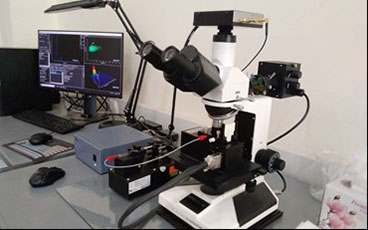
In the first area of research, for the first time, the kinetics of relaxation processes near the critical point in solutions has been revealed within a wide range, and the dependence of rheological, acoustic, and thermal properties on type, size, and concentration of nanoparticles in nanofluidic systems has been established. Research is carried out using NanoSight LM10 (Great Britain), Rheostress RS600 (Germany) and acoustic analyzer E5100B (Japan).
SCIENTIFIC RESULTS OF THE LABORATORY:
- Significant deceleration of the relaxation time during the formation and decay of molecular associates near the critical point was revealed;
- It has been established that relaxation processes associated with the intramolecular rotation of molecules proceed regardless of the degree of proximity to the phase transition.
For the first time it has been determined that in an aqueous solution of dimethylpyridine of critical composition in the vicinity of the critical point of liquid-liquid separation, there are packing and protolysis effect factors that prevent the formation and growth of concentration fluctuations. - It has been shown that the effect of adding nanoparticles to the coolant depends nonlinearly on the ratio between the viscosity and thermal conductivity of the nanofluid, which makes it possible to control the heat transfer process by choosing the optimal concentration and size of nanoparticles.
Nano Sight LM10 device |
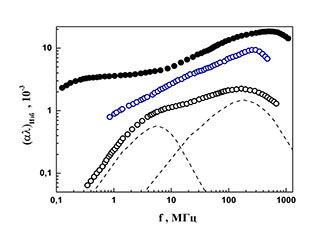
Attenuation dispersion of ultrasonic waves in dimethylpyridine |
Application of SiO2 nanoparticles in the construction industry
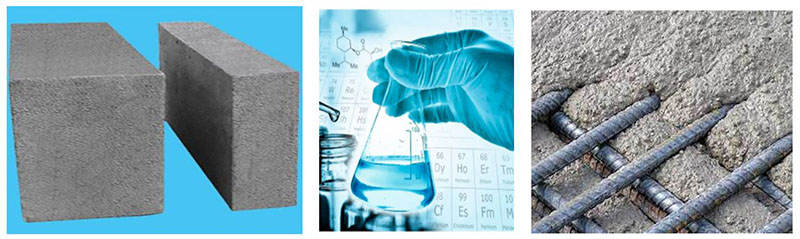
In 2023, the laboratory staff received project No. С-21-2023 "Development of an integrated method for improving the plasticity and seismic resistance of concrete based on amphiphilic molecules" of the Fund for the Support of Seismology, Seismic Resistance of Structures and Seismic Safety under the Cabinet of Ministers of the Republic of Uzbekistan. The introduction of nanoadditives and modifiers based on SiO2 improves the performance properties of concrete stone, significantly increases its compressive strength. Mineral nanodispersed additives in the form of nanosilica are the most promising ones due to the high reactivity and low cost of nanosilica, the waste of which accumulates annually in large quantities in the adjacent territories of the Metal Plant in Bekabad.
During the project implementation, the structural features and operational properties of concrete-cement stone will be studied. Directional modification of the structure of the composite material is achieved by varying the fineness and concentration of the nanoadditive. An analysis of the test results shows that in samples of concrete stone with a nano-additive, an increase in compressive strength from 10 to 22% is observed.
Nanosilica, like silica, is a by-product of the production of ferrosilicon and acts as a highly active pozzolan in the concrete-cement mixture, increasing the strength characteristics of the concrete stone. However, at low concentrations (from 1 to 3 wt.%) it is difficult to achieve a uniform distribution of the nanoadditive over its total volume. The laboratory has developed a technology that makes it possible to achieve a uniform distribution of nanosilica in the form of a hydrosol in mixing water, pre-activated or simultaneously activated by physical fields. At the same time, an increase in strength characteristics by at least 1.2 times is achieved, cement consumption is reduced, crack resistance and frost resistance are increased.
In addition to this, to increase the stability of the nanosilica hydrosol and increase the plasticity of the concrete mixture, it is proposed to use amphiphilic molecules, namely an anionic surface-active substance (SAS) sodium alkylbenzenesulfonate. At the same time, the mobility of the concrete mixture increases, its frost resistance and water resistance increase, and, ultimately, the seismic resistance of concrete structures increases.
NANOSCALE SIMULATION GROUP (NSG)
A new scientific group - Nanoscale Simulation Group (NSG) has been established at the Institute of Ion-Plasma and Laser Technologies of the Academy of Sciences of the Republic of Uzbekistan to fulfill the tasks within the framework of the fundamental project (F-FA-2021-512) funded by the Ministry of Innovative Development of the Republic of Uzbekistan: https://nsgroup.uz/
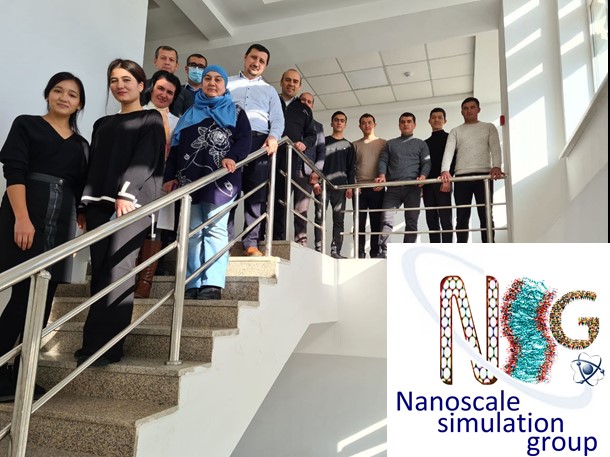
The group consists of three doctors and twelve talented young researchers (junior researchers, research interns, and graduate students).Two master's theses were successfully defended in 2022 within the project. In addition to their duties within the framework of the project, the members of the NSG group have been actively participating in the organization of competitive classes in 3 areas (i.e., programming, physical chemistry and computational physics) through our telegram channel (https://t.me/CompMaterSciUz) in order to select young researchers for the group.
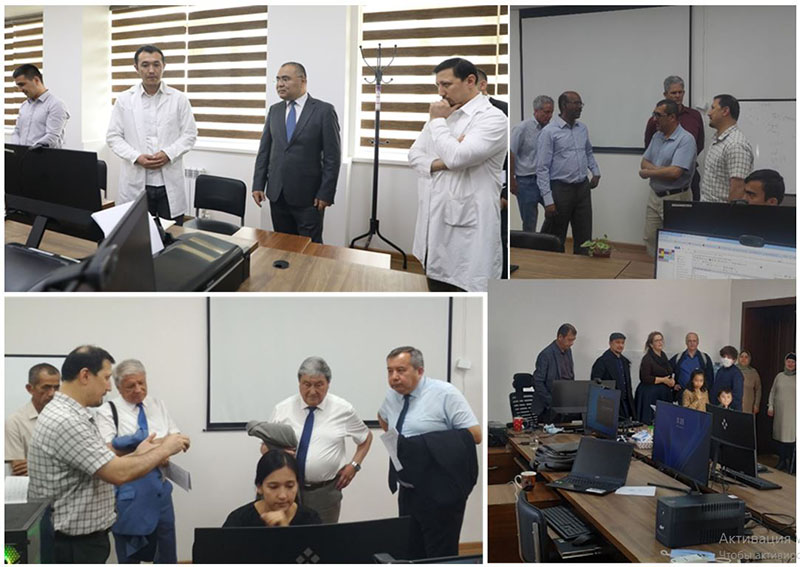
These trainings serve to develop the knowledge and acquire skills of young scientists in the simulation of physical/chemical and biological processes. The scientific activities of the NSG group were widely covered by the media. In addition, many distinguished guests visited the group
.
INTERNATIONAL WORKSHOP
As part of the project, it was planned to establish a computer simulation school in the first year (2021-2022), and for this purpose, organize a workshop with the participation of leading scientists. Consequently, an international workshop on "Perspectives for the use of computer experiments in innovative research" was organized on February 28, 2022.
The main goal of conducting the workshop is to develop the skills of scientific researchers to research physical, chemical and biological processes using computer simulations. In addition to local researchers, foreign experts were also involved in order to hold the event effectively. Although most foreign experts offered to teach online lectures, some agreed to come to our country to participate in the workshop. In particular, Karel Venken (University of Antwerp, Belgium), the main expert on the installation and efficient use of high-performance supercomputer clusters, participated in this event as a keynote speaker. The workshop was held online (via the Zoom platform) and offline. The workshop was held in English..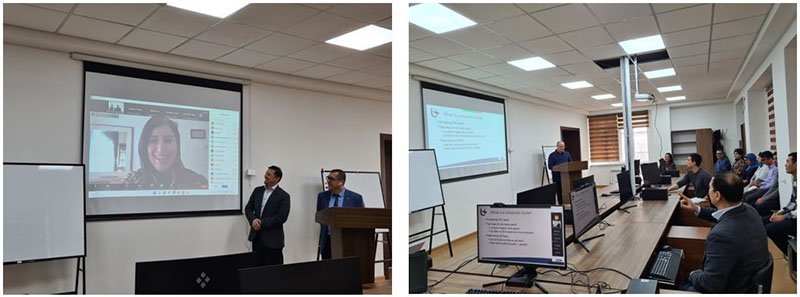
In addition to scientists from the scientific institutions of the Academy of Sciences of the Republic of Uzbekistan and various higher educational institutions in Uzbekistan, about twenty young researchers under the age of 40 participated as listeners in this workshop. Such workshops allow the creation of a high-level computing/simulation environment in research institutes and universities, such as the world's leading scientific centers.
FISTUZ
In addition to his invited lecture, the Belgian expert Karel Venken also conducted master classes and practical training for young scientists on setting up and working with supercomputers, scheduled for March 1-4, 2022. In particular, on March 1-2, this specialist conducted a master class for the participants on installing a supercomputer system, as well as conducted practical training on building this system and ensuring their communication with each other. As a result of practical training, the group created a new supercomputer cluster - FISTUz (Fast Intelligent Simulation Tool of Uzbekistan).
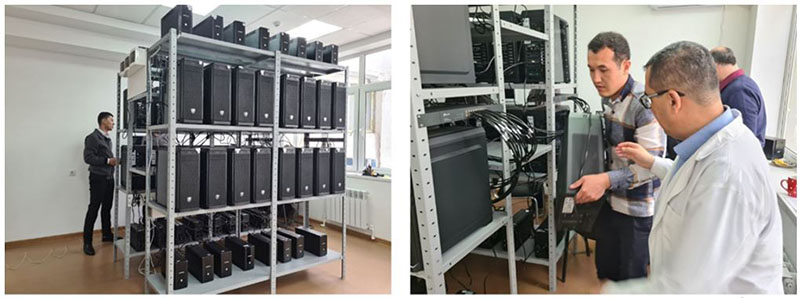
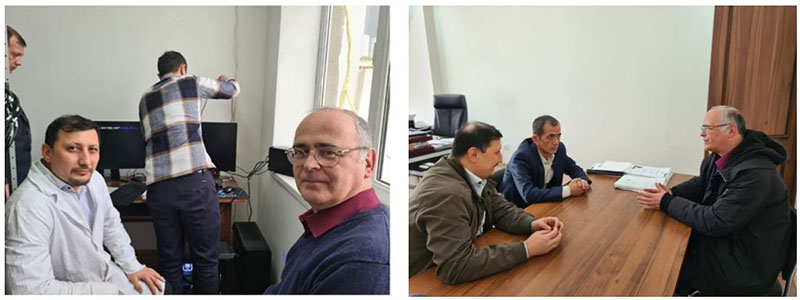
FISTUz supercomputer cluster consists of 47 Worker, 1 Builder and 2 Master computers. Each Master and Worker computer consists of high-end (Intel Core i9, RAM 64GB, HDD 2TB, etc.) parameters and are connected to each other via a network using Slackware 15.0 Linux operating system. An NFS server is installed on the Builder (Intel Core i7, RAM 8GB, HDD 2TB) computer to connect the Master and Worker computers. In the FISTUz cluster room, 3 high-power air conditioners are installed in order to help to maintain a constant temperature specified in the norm (25 ± 5 °C). At FISTUz, every device is connected to UPS which compensates for emergency power outages. The Internet network connected to the cluster is protected from users outside the institute.
On March 3-4, the Belgian expert Karel Venken also conducted master classes for group members on how to use the FISTUz cluster. As a result of the master classes, each user acquired the skills of working with the FISTUz cluster over the network. In particular, WinSCP and MobaXTerm programs allow users to connect to FISTUz with personal login/passwords, assign tasks to the cluster, and start the calculations/simulations.
Tasks assigned to cluster computers are distributed and started in the order in which the processors of the computers are occupied (each Worker has 8 processors or 16 threads). Users can also monitor the list of tasks assigned to the FISTUz cluster and monitor the number of occupied processors of each computer in the cluster.
By third direction superionic crystals of rare earth trifluorides with the general formula LnF3 (Ln–La, Ce, Pr) are studied in the laboratory. Methods of semi-empirical quantum physics are used to study superionic crystals. This approach makes it possible to effectively analyze the experimental data of various research groups and determine the mechanisms of certain processes occurring in crystals. The following results were obtained:
- A detailed profile of the potential relief during the formation of a Frenkel defect has been obtained and a model of superionic disordering of the LaF3 crystal has been described.
- A macromodel of charge transfer by fluorine ions (vacancy mechanism) has been proposed.
- Surface phenomena have been studied, including the natural migration of vacancies to the surface and the influence of the surface topography on this process
Superionic materials are widely used in the creation of autonomous current sources, various information converters, electrochromic displays, energy storage capacitors and other functional electrical devices, as well as electrochemical sensors for analyzing the composition and properties of various substances. These materials are also widely used as active materials in various sensors; and the scope of their application is constantly expanding.
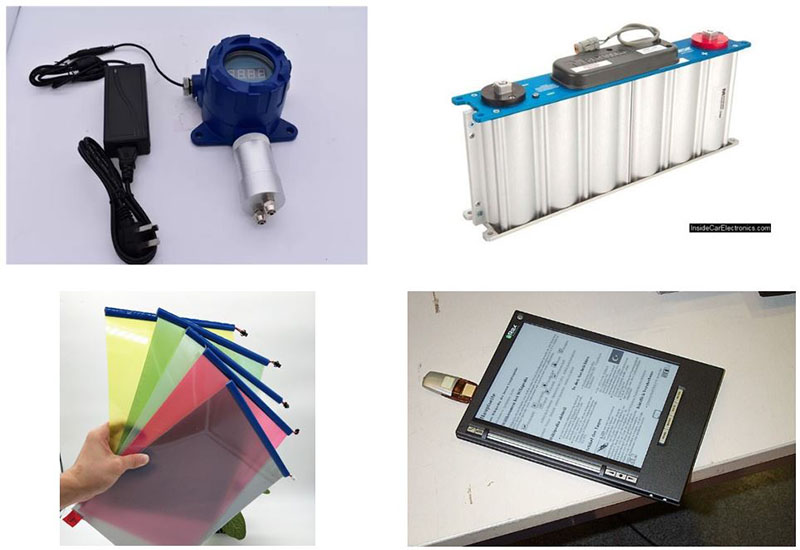
ПNonlinear phenomena and anisotropy of elastic and photoelastic properties of dielectric and ferroelectric crystals are also studied in this direction. A number of original results were obtained, including:
- Based on the Williams-Lamb method, a device for precision measurement of the velocity and attenuation of acoustic waves in materials was developed, which was used for research.
- For the first time, all independent real and imaginary components of the complex elasticity tensor and effective anharmonicity constants in bismuth and paratellurite silicate and germanate crystals have been determined.
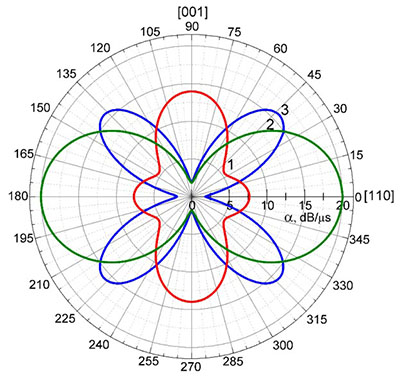
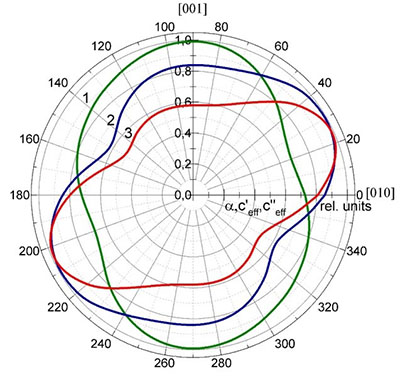
- Characteristic attenuation surfaces for longitudinal and transverse acoustic waves propagating in the planes of symmetry (100), (001) and (110) are constructed, which clearly characterize the anisotropy of the attenuation coefficient of acoustic waves in bismuth silicate and bismuth germanate and paratellurite crystals.
- It is established that the strongest anisotropy of attenuation of acoustic waves in the planes of symmetry orthogonal to the axes of symmetry of the second and fourth order is observed for quasi-transverse waves with polarization in the same plane.
- For the first time, a new method has been proposed for calculating the characteristics of acoustic waves in paratellurite crystals near the axes of symmetry, which makes it possible to identify the correct pattern of changes in the velocity and attenuation of acoustic waves with small deviations in the direction of their propagation from the axes of the second order.
- It is shown that the piezoelectric effect does not change the qualitative picture of the anisotropy of acoustic attenuation, however, it can greatly enhance the anisotropy of attenuation of piezoactive transverse acoustic waves.
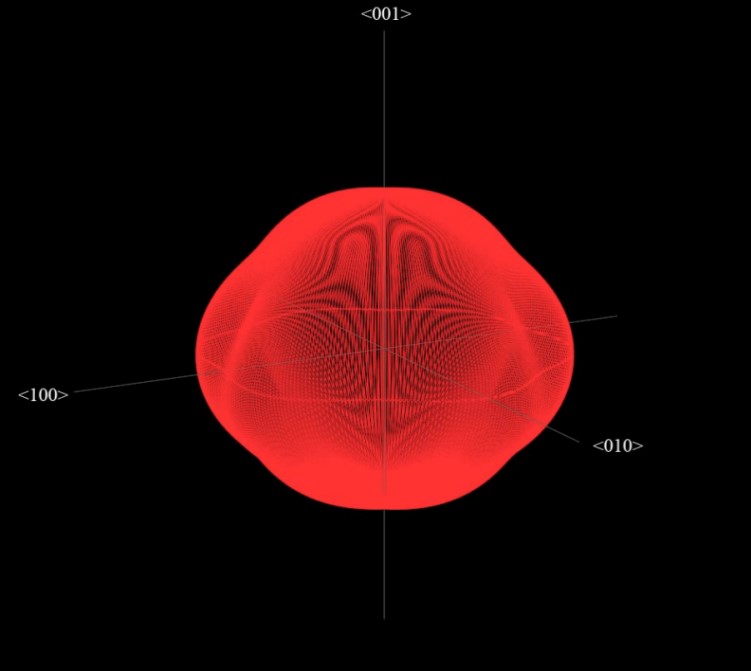
Characteristic surface of velocity of longitudinal acoustic waves in bismuth silicate crystals in three-dimensional space
Cross section of the attenuation surface of longitudinal (1) and transverse (2, 3) acoustic waves in sodium fluoride crystals by the (110) plane
|
Cross section of the surface of real (1) and imaginary (2) effective elastic constants: as well as attenuation (3) for longitudinal acoustic waves in lanthanum gallosilicate crystals by the plane (001) |
Training of personnel of scientific qualification:
In the last 5 years (from 2018 to 2022), four employees of the laboratory: Krivorotov V.F., Khalilov U.B. Yusupov M.S. and Rakhimov Kh.Yu. defended their doctoral dissertations and received the degree of Doctor of Physical and Mathematical Sciences and three employees: Egamberdiev K.B., Nuzhdov G.S. and Kurbanov Zh.O. defended their dissertations and received the degree of Doctor of Philosophy in physical and mathematical sciences. Also during the specified period, more than 20 articles were published in prestigious foreign scientific journals.
Currently, seven doctoral students and applicants of the laboratory are conducting research or completing work on their dissertation topic: Paizillaev A.N., Elboeva M.I., Makharov N.M., Tugalov F.B., Saidvaliev U.A., Allaev B.A., Telyaev S.K., Khusanova D., Zhuraev I., Mekhmonov K., Zhurabaev T., Safarov F., Khaydarov F.
COLLABORATION LABORATORY
- Bar-Ilan University, Tel Aviv (Israel)
- University of Göttingen, Göttingen (Germany)
- Moscow State University. M.V. Lomonosov
- Leningrad State University. A.S. Pushkin
- Institute of Materials Science of the Academy of Sciences of the Republic of Uzbekistan
- Institute of Chemistry and Physics of Polymers of the Academy of Sciences of the Republic of Uzbekistan
- Institute of General and Inorganic Chemistry of the Academy of Sciences of the Republic of Uzbekistan
- Navoi State Mining University
- Research Institute of Microelectronics and Semiconductors at NUU. M. Ulugbek, Tashkent
- Institute of Nuclear Physics of the Academy of Sciences of the Republic of Uzbekistan
- Tashkent State Technical University named after. I.A.Karimova
- Physical-Technical Institute. A.F. Ioffe RAS
- National University of Uzbekistan named after. M. Ulugbek
- Samarkand State University named after. A.Navoi
Projects:
- 2023-2024 Project of the Fund for the Support of Seismology, Seismic Resistance of Structures and Seismic Safety of Uzbekistan under the Cabinet of Ministers of the Republic of Uzbekistan No. С-21-2023 “Development of an integrated method for increasing the plasticity and seismic resistance of concrete based on amphiphilic molecules”
- 2021-2026 Draft program for fundamental research Ministry of Innovative Development of the Republic of Uzbekistan No. F-FA-2021-509 "Selective synthesis of new carbon nanostructures for advanced nanodevices"
- 2018-2020 Draft Applied Research Program of the Ministry of Innovative Development of the Republic of Uzbekistan FA-Atech-2018-44 "Optimization of the technology of complex additives for creating high-strength concrete compositions by activating the mixing solution"
- 2018-2019 Draft Program for Fundamental Research for Young Scientists No. MU-F3-2017101937 "Investigation of chemical relaxation processes in nanofluids using dynamic light scattering and acoustic spectroscopy"
- 2017-2020 Draft program of fundamental research No. OT-F2-56 "Internal motion and wave form of heat transfer in superionic trifluorides of rare earths LnF3 (Ln-La,Ce,Pr)"
- 2017-2020 Draft Program for Fundamental Research No. OT-F2-42 "Transport Phenomena and Phase Transitions in Nanofluids".
- 2016-2017 Scientific and technical project of a special purpose on the topic: "Fog" of the Committee for the Coordination of the Development of Science and Technology (KKRSNiT) under the Cabinet of Ministers of the Republic of Uzbekistan (NTP SN on the topic: "Fog")
- 2015-2017 Draft Applied Research Program FA-A4-F063. "Development of technology for obtaining new building materials based on vermiculite with high heat and sound insulation properties."
- 2014-2015 Project of innovative research program FA-FI-F004 "Development of technology, mastering production and production of small batches of lubricating paste for molds based on local raw materials"
- 2012–2013 IFA-2012-2-3 Innovative Research Program "Mastering the technology for the production of a lubricant composition for molds with the release of products in small batches"